Definition: Tasawwuf, sufism
"This is the only book that you need for the fullest definition of tasawwuf." Shaykh Muhammad ibn al Habib

In 1968 Shaykh Muhammad ibn al Habib gave Shaykh Abdalqadir as-Sufi, who was then his Muqaddem, a book by the renowned Shaykh Ahmad ibn ‘Ajiba. Shaykh Muhammad ibn al Habib, may Allah be pleased with him, gave it to Shaykh Abdalqadir saying “This is the only book that you need for the fullest knowledge of tasawwuf. All of it can be read as a commentary on my Diwan.” ‘Al Futuhat al Ilahiyya fi Sharh al Mabaahith al-Asliyya’ was translated as The Basic Research.
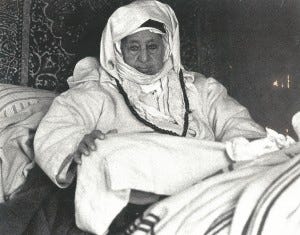
“a whole Islam makes someone a sufi. You haven’t got an Islam until you have this.” Shaykh Abdalqadir as-Sufi Sufism heart of Islam, Channel 4, 1990
In this spirit of clarity and making it new, “The precise definition of the word, pictorially the sun’s lance coming to rest on the precise spot verbally” (Ezra Pound, MAKE IT NEW) this passage below by Shaykh ibn ‘Ajiba defines Sufism. It is taken from a recent translation of ibn ‘Ajiba by Aisha Bewley. Here is a comprehensive definition of sufism, that includes statements of the great sufis across fourteen centuries:
First Introduction: The Science of Tasawwuf
1. Definition:
Imam Al-Junayd said, “[Tasawwuf] is that the Real makes you die to yourself and live by Him.” He also said, “It is that you are with Allah without attachment.” It is said that it is adopting every exalted characteristic and relinquishing every base characteristic; that it is noble character appearing at a noble time among noble people; that it is that you own nothing and nothing owns you; and that it is abandoning the self to Allah so that it wants whatever He wills. It is also said that tasawwuf is based on three qualities: holding to poverty and loss, spending on and showing preference to others, and abandoning management and choice; that it is having all hope in Reality and no hope from creation; that it is dhikr through gathering, ecstasy through listening, and acting through following; that it is refusing to budge from the door of the Beloved even if He shuts you out. It is further said that it is the purity of proximity after the turbidity of remoteness; that it is sitting with Allah without worry; and that it is being protected from the sight of created existence.
Abu Hamza al-Baghdadi said, “The sign of the true Sufi is that he is poor after being wealthy, lowly after being mighty, and obscure after being well-known. The sign of the false Sufi is that he is wealthy after being poor, mighty after being lowly and well-known after being obscure.”
Al-Hasan ibn Mansur said, “The Sufi is alone in the Essence: no one accepts him and he accepts no one.” It is said that the Sufi is like the earth – all kinds of ugly things are thrown onto it but only beautiful things emerge from it, and both good and evil people tread upon it; and that there is nothing uglier under the sun than an avaricious Sufi.
Ash-Shibli said, “The Sufi is cut off from creation, connected to the Real, as is indicated by the words of the Almighty, ‘I have chosen you for Myself.’ (20:41)” He also said, “The Sufis are children in the lap of the Real.” It is said that a Sufi is someone whom the earth does not carry nor the sky cover over, meaning that he is not encompassed by created existence.
Shaykh Ahmad Zarruq said, “Tasawwuf has been defined, delineated and explained in about two thousand different ways. The basis of all of them, however, is true sincerity in turning to Allah Almighty. They are simply facets of this, and Allah knows best.” Then he said, “The fact that there is such great disagreement about the One Reality simply indicates how difficult it is to grasp its entirety. As all the different definitions derive from a single source, which contains within its compass everything that has been said about it, then the expression used is according to what has been grasped of it. Thus all the statements about it are actually a matter of detail rather than substance, each person expressing that which corresponds to his degree of knowledge, action, state, tasting and so forth. That is the source of the differences found within tasawwuf and that is why, when Abu Nu‘aym wrote about most of the people he deals with in his Hilya, he added a saying of theirs appropriate to their particular state. It is said that that is the nature of tasawwuf – it means that everyone with a portion of true sincerity in turning to Allah has a portion of tasawwuf and that everyone’s tasawwuf only consists in their true sincerity in turning to Allah, so understand that.”
Shaykh Zarruq also said, “A rule when it comes to sincere turning-to-Allah is that its precondition is that it must be done in a way which is pleasing to Allah Almighty and with means that are pleasing to Him. Anything which has a precondition is not valid without that precondition being fulfilled. Since ‘He is not pleased with thanklessness (kufr) in His slaves’ (38:7), it is necessary to make one’s faith true, ‘and if you are thankful, He will be pleased with you’. So acting according to Islam is essential. And because of this there can be no tasawwuf except with correct fiqh since the outward judgements of Allah Almighty can only be known through it. In the same way there can be no fiqh without tasawwuf since there can be no action without sincere turning-to-Allah. And neither of these are possible without faith since the validity of both of them is dependent on it. So they must be combined together due to their essential mutual dependence in law, just as spirits are inseparable from bodies – the spirit only knows existence through the body and the body only knows existence through the spirit, the one completes the other.”
Malik said regarding this matter: “If someone practises tasawwuf without fiqh, he is a heretic (zindiq); if someone practises fiqh without tasawwuf, he is a deviant (fasiq); and if someone combines the two then he achieves realisation.” The heresy of the first lies in his denial of personal responsibility by absolute attribution of all his actions to Allah (jabr), thereby denying Divine wisdom (hikma) and rulings. The deviancy of the second lies in the fact that his knowledge is devoid of the quality of sincere-turning-to Allah, which is the very thing that stops people disobeying Him, and is devoid of that sincerity which is a precondition for all action. And the realisation of the third lies in his embodiment of the reality (haqiqa) due to the absoluteness of his adherence to the Real. Therefore, recognise and understand that there can be no true reality (haqiqa) except through absolute adherence to the Real, and that no human being may achieve perfection except through the embodiment of that.
2. Subject matter
The subject matter of tasawwuf is the Sublime Essence itself since it seeks to know it either through evidential proof or through direct witnessing and vision, the former applying to those who are on the path and the latter to those who have arrived. It is also said that its subject matter is the self (nafs), heart (qalb) and spirit (ruh) since it seeks their purification and refinement. There is no great difference between this definition and the first since “he who knows himself knows his Lord.”
3. Founder
The founder of this science was the Prophet, may Allah bless him and grant him peace, taught to him by Allah through Divine revelation and direct inspiration. The first thing brought down by Gabriel was the shari‘a. When that was established, he then brought down the Reality (haqiqa), giving it to some people but not all. The first to speak about it openly was Sayyiduna ‘Ali, may Allah ennoble his face. Then Hasan al-Basri, whose mother Khayra was the client of Umm Salama, the wife of the Prophet and whose father was the client of Zayd ibn Thabit, took it from him. When Hasan al-Basri died in 110 AH, Habib al-‘Ajami took it on, and then Abu Sulayman Dawud at-Ta‘i took it from him. When he died in 160 AH, Abu Mahfuz Ma‘ruf ibn Fayruz al-Karkhi took it on, and then Abu-l-Hasan Sari ibn Maghlis as-Saqati took it from him. Then when he died in 251 AH, the baton was passed on to the Imam of this tariqa and the one who made the signs of the Reality manifest, Abu-l-Qasim Muhammad ibn al-Junayd al-Khazzaz.
Imam al-Junayd’s family came from Nihawand although he himself grew up in Iraq. He studied fiqh with Abu Thawr and gave fatwa according to his school, even though he spent a lot of time in the company of Imam ash-Shafi‘i. He then kept the company of his uncle, as-Saqati, and that of Abu-l-Harith al-Muhasibi and others. Imam al-Junayd’s words and deep insights are preserved in many books. He died, may Allah be pleased with him, in 297 AH and the location of his tomb in Baghdad is well-known and much visited. The knowledge of tasawwuf then spread through his companions and continued on from them and will remain ever-present until as long as the deen lasts. In an alternative chain, the knowledge was passed on from Sayyiduna ‘Ali to the first of the qutbs, his son al-Hasan; and then from him to Abu Muhammad Jabir; then to the qutb, al Ghazwani; then to the qutb, Fath as-Sa‘ud; then to the qutb, Sa‘d; then to the qutb, Sa‘id; then to the qutb, Sidi Ahmad al Marwani; then to Ibrahim al-Basri; then to Zaynu’d-din al Qazwini; then to the qutb, Shamsu’d-din; then to the qutb, Taju’d-din; then to the qutb, Nuru’d-din Abu-l-Hasan; then to the qutb, Fakhru’d-din; then to the qutb, Taqiyyu’d-din al Fuqayr; then to the qutb, Sidi ‘Abdu-r-Rahman al-Madani; then to the great qutb, Moulay ‘Abdu-s-Salam ibn Mashish; then to the famous qutb, Abu-l-Hasan ash-Shadhili; then to his successor, Abu-l-‘Abbas al-Mursi; then to the great gnostic, Sidi Ahmad ibn ‘Ata’allah; then to the great gnostic, Sidi Dawud al-Bakhili; then to the gnostic, Sidi Muhammad, the Sea of Purity; then to his son, the gnostic, Sidi ‘Ali ibn Wafa; then to the famous wali, Sidi Yahya al-Qadiri; then to the famous wali, Ahmad ibn ‘Uqba al-Hadrami; then to the great wali, Sidi Ahmad Zarruq; then to Sidi Ibrahim Afham; then to Sidi ‘Ali as-Sanhaji, known as ad-Dawwar; then to the great gnostic, Sidi ‘Abdu-r-Rahman al-Majdhub; then to the famous wali, Sidi Yusuf al-Fasi; then to the gnostic, Ahmad ibn ‘Abdullah; then to the gnostic, al-‘Arabi ibn ‘Abdullah; then to the great gnostic, Sidi ‘Ali ibn ‘Abdu-r-Rahman al ‘Amrani al-Hasani, [known as Sidi ‘Ali al-Jamal]; then to the famous gnostic, the shaykh of shaykhs, Sidi Moulay al ‘Arabi ad-Darqawi al-Hasani; then to the perfect realised gnostic, our Shaykh, Sidi Muhammad ibn Ahmad al-Buzidi al-Hasani; and finally to the slave of his Lord and the least of His slaves, Ahmad ibn Muhammad ibn ‘Ajiba al-Hasani, and from him many others have taken. All favour belongs to Allah, the High, the Great.
4. Name
The name of this science is tasawwuf although there is some disagreement about the etymology of this name. There are five main positions.
The first is that it is derived from sufa (a tuft of wool) because with Allah the Sufi is like a tuft of wool at the mercy of the wind, having no say in the direction of his own management.
The second is that it is derived from sufa (the hair of the back of the neck) because of its softness. So the Sufi is hidden and soft like that hair.
The third is that it is derived from sifa (attribute), since the Sufi embodies praiseworthy attributes and casts off blameworthy ones.
The fourth is that it is derived from safa’ (purity). This derivation is considered the soundest, and for this reason Abu-l-Fath al-Busti said in a verse of poetry:
People disagree about the word “Sufi”,
Ignorantly supposing it to come from wool (suf).
I give this name to no one but a pure (safi) young man,
who is purified (sufi) until Sufi becomes his name.
The fifth is that it is derived from the Suffa (verandah) of the Mosque of the Prophet, which was where the people of the Suffa lived. This is because the Sufi adopts the same characteristics as those attributed to them by Allah in the Qur’an, when He says about them: “Restrain yourself patiently with those who call on their Lord morning and evening, desiring His face.” (18:28) And, as Shaykh Zarruq maintained, this quality of theirs is the source of every derivation.
—Shaykh ibn ‘Ajiba, may Allah be pleased with him, translated by Aisha Bewley. The full text can be bought here.
The Basic Research defines Sufism. It is a commentary on the Diwan, which was not composed to define Sufism so much as transmit it. This requires the proper circumstances, as we know.