The poets’ treason
“Those of us who, like Pound, have long been interested in the Money Question are familiar with the psychological barrier most people have in this respect…

…They are unable to contemplate the fact that we are potbound in an arbitrary and artificial money system which has no correspondence to reality at all.”—Hugh MacDiarmid
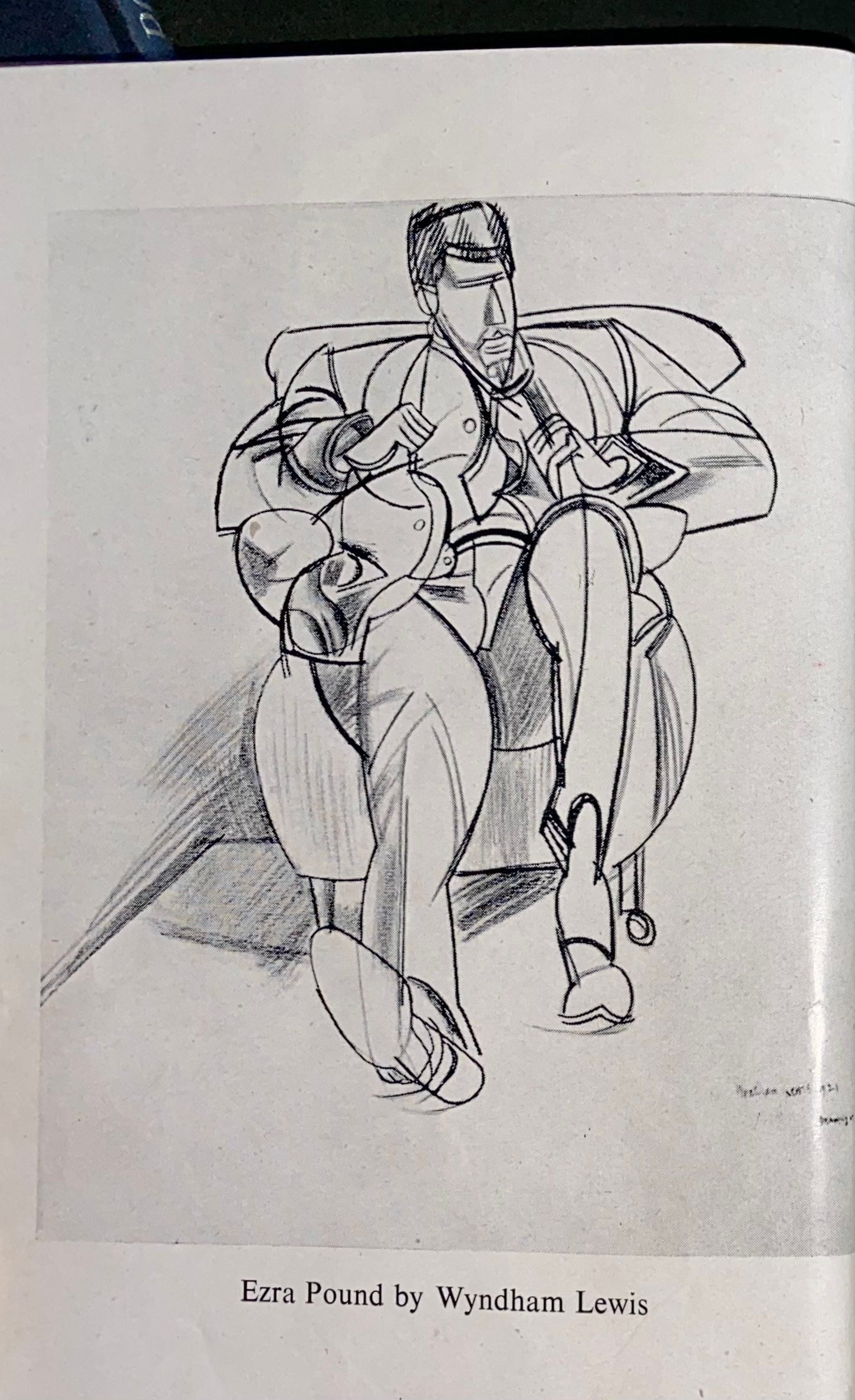
Pound was accused of treason for his wartime broadcasts. When he made his first broadcast on Rome Radio America was yet to join the war. Pound had already seen Europe destroy itself once, as his poem Hugh Selwyn Mauberley grievously recounts, he had close friends killed, and had fought during the thirties for a radical monetary reform which would stop another war from happening again—his broadcasts were no treason.
The central thrust of his argument was that war was not in America’s interests—really he was a patriot. The American dream of Adams and Jefferson had been betrayed by a cabal of international bankers who were neither American nor British.
Pounds’ views which landed him in military detainment and on death row were very soon borne out by intelligent consensus elsewhere. In a letter to the Times Business News 20 May 1968, Lord Boothby wrote “when all is said and done” the Central Bankers “were primarily responsible for the Second World War.”
This is what America’s greatest poet Pound had maintained throughout his broadcasts and in his wartime economic writings.
Lord Boothby’s letter refers to the ironic fact that even Churchill realised extent of the disastrous policies the Bank of England had forced on him when he was Chancellor of the Exchequer. Lord Boothby quotes Churchill as having written to him in February 1932, “I have gone the whole hog against gold. To hell with it! It has been used as a vile trap to destroy us . . . Surely it will become a public necessity to get rid of Montagu Norman. [governor of the Bank] No man has ever stultified as he has been in his 14 years’ policy.”
Pound wrote in What is Money For? 1939, “. . . a nation whose measure of exchange is at the mercy of forces OUTSIDE the nation, is a nation in peril, . . .”
This remains the case today, for every nation. This is what Hilaire Belloc termed “The Money Power.” Yet an insignificant reviewer in the TLS recently described this common sense term “anti semitic”, how emotion can suppress thought. Pound’s ideas on monetary subjects were nearer the truth than those of ‘orthodox’ economists. He would have seen how Ramsay MacDonald’s government was forced to betray its principles by non-elected international bankers. There is now no ambiguity about this, as the evidence was released in the late 1960s.
“Sovereignty inheres in the power to issue money, or to distribute the power to buy (credit or money) whether you have the right to do so or not.”—Ezra Pound
Infantilism increasing to our time,
attention to outlet, no attention to source,
That is: the problem of issue.
Who issues it? How? (Canto LXXXVII)